
CIPS L4M1 : Scope and Influence of Procurement and Supply

- Exam Code: L4M1
- Exam Name: Scope and Influence of Procurement and Supply
- Updated: Oct 16, 2026
- Q & A: 52 Questions and Answers
About CIPS L4M1 Exam
CIPS L4M1 Exam Syllabus Topics:
| Topic | Details |
|---|---|
| Topic 1 |
|
| Topic 2 |
|
| Topic 3 |
|
| Topic 4 |
|
| Topic 5 |
|
Valid practice torrent for better study
First, we have built a strong and professional team devoting to the research of L4M1 valid practice torrent. The experts of the team are all with rich hands-on IT experience and ever work for the international IT corporations. The authority and validity of CIPS L4M1 training torrent are the guarantee for all the IT candidates. Maybe, you ever heard that some vendors offer the cheap dumps with lots of useless questions & answers, you have to study really hard with extra number of worthless questions and even they can't promise you success in the exam. Here, L4M1 valid exam torrent will provide you with the best suitable dumps for you to study. Each questions & answers from CIPS Level 4 Diploma in Procurement and Supply L4M1 exam study torrent are all refined and summarized from a large number of technical knowledge, chosen after analysis of lots of datum. We remove the old and useless questions which are no longer needed for the actual test, and add the latest question into the CIPS L4M1 exam dumps torrent at the same time. So the high-quality and best validity of L4M1 training torrent can definitely contribute to your success.
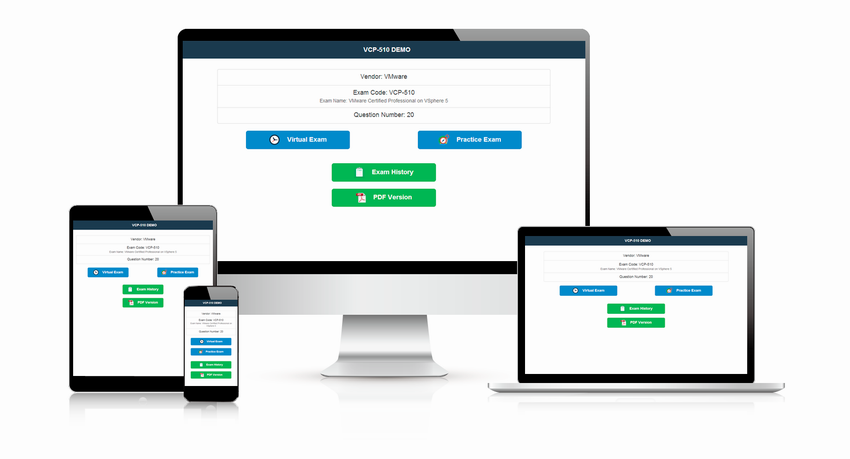
What's more, our specially designed products like L4M1 free demo will provide the customer with the overview about our L4M1 dump torrent. We exclusively offer instant download L4M1 free sample questions & answers which can give right guidance for the candidates.
Safe investment-money back guarantee in case of failure
We commit that you will enjoy one year free update for CIPS Level 4 Diploma in Procurement and Supply L4M1 exam dumps torrent after you purchase. That is to say you will grasp the latest information without spending extra money. If there is any update, our system will send an email attached with updated L4M1 exam training torrent to you automatically. In the unlikely even if you fail the L4M1 exam, we promise to give you full refund. The refund policy is very easy to carry out, you just need to send us an email attached with your scanned failure certification, then we will give you refund after confirming. We will refund your money to the same card that is used to make payment. Besides, if you have any questions, our 24/7 Customer Support are available for you.
Choose our L4M1 Scope and Influence of Procurement and Supply valid practice torrent, we guarantee you 100% passing.
Instant Download: Upon successful payment, Our systems will automatically send the product you have purchased to your mailbox by email. (If not received within 12 hours, please contact us. Note: don't forget to check your spam.)
When it comes to L4M1 certification, all of us are very excited and have a lot words. Someone complains the difficulty of the actual test, someone says he has get stuck in one questions, even some people are confused about all of the L4M1 exam test. Actually, gaining the L4M1 certification can bring about considerable benefits. For example, having the L4M1 certification on your resume will give you additional credibility with employers and consulting clients, and a high salary & good personal reputation will come along with that. From the above, we can see how important the L4M1 certification is. Our life is deeply affected by the IT technology and L4M1 certification.
Now, we will recommend the most valid & best-related L4M1 exam study torrent for your preparation. No matter how much you are qualified or experienced, we are just here to assist you pass the L4M1 test with 100% results.

CIPS Scope and Influence of Procurement and Supply Sample Questions:
What is meant by a structured procurement process? (10 marks) Why is this important? (15 marks).
Reveal Solution Discussion 0Correct Answer:
See the solution in Explanation part below
Explanation:
- Definition of 'structured procurement process' - when an organisation provides a sequence of actions / steps to take to get the outcome (the procurement of an item). This involves an organisation providing guidelines and instructions of how things should be done. Basically following a step-by-step process.
- Why this is important - Ensures all tasks that need to be done are done, maintains consistency, prevents conflict and suboptimal behaviour, improves efficiency, better managerial control, compliance (with laws and standards), assists with continuous improvement, may result in time/ cost savings, reduces risks such as fraudulent spending.
Example essay:
The first part of the question is worth 10 points, so you could include a few of the following points. It would also be good to include examples:
- Structured procurement involves creating rules on how procurement should be done
- This is in contrast to reactive / maverick spending
- May come about due to company policy, external regulations or through trying to achieve Competitive Advantage
- Examples include an organisation having set procedures for ordering items of different spend- e.g. Procurement Assistants can purchase items up to £500. Items between £500-£1000 require a manager's approval and anything over £1000 requires a written Business Case in order to procure
- Structures Procurement Processes will usually also include the use of a designated e-procurement tool. E.g. an organisation may insist that all tenders use a certain online system and that invoices are sent via X system within 30 days.
The second part of the question is worth slightly more points, so spend more time on this. You could put each of the reasons why it is important in a separate paragraph. Also use examples where you can;
- Ensures all tasks that need to be done are done- having structured processes means having a step-by-step guide to how to procure. This means activities are well co-ordinated and there are no gaps, no duplications of effort and no conflicting efforts. It may involve assigning different people in the team different roles e.g. someone makes the requisition and someone else approves it. It also means that nothing is forgotten.
- Maintains consistency- having standardised processes means each procurement exercise follows the same process. This may include using a standard template for a requisition or ITT. Where there is consistency, this results in time being saved and less mistakes being made as everyone (including supply partners) is familiar with the processes.
- Prevents conflict and suboptimal behaviour- in organisations that use structured procurement processes everyone does the same. This means there is no conflict (e.g. one person doing things one way and another person does it differently and arguing which way is best). It also means no one can do procurement 'wrong' - there are written guides and procedures to follow. This is particularly helpful for new starters.
- Efficiency - time and money can be saved where there are standard procedures as people don't have to plan each procurement activity individually. Structured Procurement Processes may also involve completing bulk orders and co-ordinating activity within the organisation which means less orders are placed over the year and efficiency savings can be made. For example, a factory may create an order of cleaning products once a quarter, compared to ordering products just as and when they are required. This will save time of the procurement department overall throughout the year and allows them to focus on other more value-adding tasks.
- Better managerial control - Managers have more oversight when using structured procurement. There are clear rules as to when managers need to be involved and provide sign-off. This visibility makes it easier for managers to make decisions and allows for early intervention where someone needs assistance. It will reduce maverick spending and fraudulent spending. For example, it is much harder to provide kick-backs to suppliers when there are clear processes and audit trails and managers have visibility over all processes.
- Compliance (with laws and standards) - particularly in the Public Sector there are rules and regulations regarding procurement practices. Using standardised processes allows organisations to demonstrate compliance with appropriate legislation. It also protects them from 'challenge'. This is when a bidder who is unsuccessful challenges the decision to award a contract to someone else. Using a structured procurement process allows the organisation to demonstrate that they procured the item correctly and the challenge is unfounded.
Tutor Notes
- This topic isn't as well explained in the new study guide as it used to be. It's all pretty obvious stuff but the language is slightly different. The guide now talks about 'compliance with processes' and the benefits this brings. Which is exactly the same as why do you follow a structured process. This is on p. 114.
- If you're feeling clever, you could mention the difference between Public and Private Sector- e.g. a private organisation may use standardised processes for efficiency and cost savings, whereas a public sector organisation may use it more for compliance purposes.
Describe the main differences between a traditional procurement approach and supply chain management approach to buying (25 points)
Reveal Solution Discussion 0Correct Answer:
See the solution in Explanation part below
Explanation:
- The question is asking you to explain the following:
- With this type of question you would be expected to discuss 3- 5 differences, giving examples.
Example Essay Structure
Introduction - explain what is meant by 'procurement' and 'SCM' - procurement is the traditional way and is to do with purchasing goods, SCM is the new way which is a more multifaceted way of securing goods and is the result of longer, more complex and more globalised supply chains.
Paragraph 1 - the objectives of each approach (5 Rights vs added value) Paragraph 2 - the approach (reactive buying vs proactive ordering) Paragraph 3 - the way of working (silo working vs cross-functional working) Paragraph 4 - the relationships with suppliers (transactional vs collaborative) Conclusion - There are many differences between the two approaches, and different companies may favour one over the other depending on their specific circumstances. E.g. small organisations that make low value and low risk purchases may take a traditional procurement approach and large multi-national organisations may require a SRM approach due to the volume of suppliers and com-plexities of the supply chains.
Example essay:
Procurement and Supply Chain Management (SCM) represent two distinct approaches to acquiring goods, reflecting the evolution of purchasing practices. Procurement, the traditional method, in-volves the straightforward purchase of goods. In contrast, SCM is a more intricate approach, born out of longer, more complex, and globalized supply chains. This essay explores the main differences between these two approaches, highlighting their objectives, methods, ways of working, and suppli-er relationships.
In the traditional procurement approach, the focus is on achieving the "5 Rights" - getting the right goods, in the right quantity, at the right quality, for the right price, and at the right time. This en-sures efficiency in the purchasing process. On the other hand, SCM goes beyond these basic objec-tives, aiming to add value to the entire supply chain. This might involve developing strategic rela-tionships with suppliers, ensuring sustainability, and aligning with broader organizational goals. For example, a company employing a traditional procurement approach might emphasize getting the lowest price, while an SCM approach could involve working with suppliers to enhance product in-novation or reduce environmental impact.
Secondly, the traditional procurement approach is often reactive, responding to immediate needs or demands. Companies using this method typically make purchases as required, without a long-term strategy. In contrast, SCM involves proactive ordering, anticipating future needs and trends. For instance, a company employing SCM might engage in demand forecasting, allowing for better plan-ning and inventory management. This proactive approach helps prevent stockouts, reduce costs, and enhance overall supply chain efficiency.
Moreover, traditional procurement often involves silo working, where different departments operate independently. The procurement team may not collaborate closely with other departments like pro-duction or marketing. In SCM, there's an emphasis on cross-functional working, breaking down de-partmental barriers for a more integrated approach. For example, an SCM team might work closely with production to ensure materials are aligned with manufacturing schedules, fostering efficiency and minimizing disruptions.
Lastly, in traditional procurement, the relationship with suppliers is transactional - focused solely on the exchange of goods for money. Conversely, SCM promotes collaborative relationships, emphasiz-ing long-term partnerships. A company using SCM might work closely with suppliers to improve processes, share information, and jointly address challenges. For instance, an SCM approach might involve collaborating with suppliers to implement just-in-time inventory systems, leading to cost savings and improved responsiveness.
In conclusion, the differences between traditional procurement and SCM are substantial and nu-anced. While a traditional procurement approach may suit smaller organizations with low-value and low-risk purchases, larger multinational companies with complex supply chains often find SCM more suitable. Understanding these differences allows companies to tailor their approach based on their unique circumstances, emphasizing the importance of flexibility and strategic alignment with organizational goals in the ever-evolving landscape of buying and supply chain management.
Tutor Notes
- This question is taken from learning outcome 1.1.1 (p2 onwards). The new study guide has drasti-cally simplified the information on this topic compared to the old syllabus (the table above comes from the old syllabus). This may be good news for students in that you don't need to know as much, but I do wonder if the study guide gives students enough 'content' to write an essay on the subject.
- If a question is to come up from LO 1.1 it would be likely be something like: definitions and dif-ferences between procurement and SCM, difference between a supply chain and a supply network, elements of SCM, or how to add value in the supply chain.
Explain, with examples, the three different ways one can categorise procurement spend: direct vs indirect, capital expenditure vs operational expenditure and stock vs non-stock items. (25 points)
Reveal Solution Discussion 0Correct Answer:
See the solution in Explanation part below
Explanation:
The knowledge to remember:
.
Essay Plan :
Remember to include examples for each of the six categories of spend. This is specifically asked for in the question so it's important to include as many examples as you can. To do this you could take an example organisation such as a cake manufacturer and explain which of their purchases would fall into each category and why.
Introduction - explain why procurement categorises spend
- Direct - these are items that are incorporated into the final goods (the cakes) so would include raw materials such as flour, eggs, sugar etc
- Indirect - these are items that the company needs, but don't go into the end product. For example, cleaning products and MRO supplies for the machines
- Capital Expenditure- these are large one-off purchases, such as buying a new piece of equipment such as a giant oven to cook the cakes.
- Operational Expenditure - these are purchases that are required to ensure the business can function day-to-day. They may include PPE for the workers in the factory and cleaning equipment
- Stock items - these are items procured in advance and held in inventory until they are needed. In a cake manufacturing factory this could be PPE for staff such as hairnets and gloves. The organisation will buy these in bulk and keep them in a stock cupboard, using these as and when they are required
- Non- stock items - items that are not stored and used right away. An example would be eggs- these will need to be put directly into the cakes as they would go off if bought in advance.
Conclusion - the categories are not mutually exclusive - an item can be direct and operational, or indirect and stock. Different companies may use different systems to classify items of spend.
Example Introduction and Conclusion
Introduction
Procurement categorizes spend to efficiently manage resources and make strategic decisions. Three primary ways of categorizing procurement spend include distinguishing between direct and indirect spend, classifying expenditures as capital or operational, and categorizing items as stock or non-stock. These distinctions aid organizations in optimizing their procurement strategies for better resource allocation.
Conclusion:
In conclusion, categorizing procurement spend into direct vs. indirect, capital vs. operational, and stock vs. non-stock items is essential for strategic resource management. While these categories provide a structured framework, they are not mutually exclusive, as an item can fall into multiple categories. For example, an item may be both direct and operational or indirect and stock. The flexibility of these categories allows organizations to tailor their procurement strategies based on their specific needs, ensuring efficient resource allocation and effective supply chain management. Different companies may adopt varying categorization approaches depending on their industry, size, and operational requirements.
Tutor notes:
- Because you've got 6 categories of spend to talk about you're only going to need 3-4 sentences for each. Providing you've said the category, explained what it is and given one example, you'll absolutely fly through this type of question
- You could also mention that it is useful to use categories of spend as this helps with budgeting. Different categories may also have different processes to follow for procuring the item (this could form part of your introduction or conclusion).
- This subject is LO 1.3.2 it's quite spread out in the text book but the main info is on p.49
- Note- different companies/ industries classify items of spend differently. Particularly packaging and salaries. Some say they're direct costs and some say they're indirect costs. Honestly, it's a hotly debated subject and I don't think there is a right or wrong. I'd just avoid those two examples if you can and stick to ones that aren't as contentious like eggs and PPE.
Explain the main differences between the Public Sector and the Private Sector (25 marks)
Reveal Solution Discussion 0Correct Answer:
See the solution in Explanation part below
Explanation:
Bottom of Form
Top of Form
- This is an open question. You could really talk about anything. Here's some ideas of content:
Example Essay
The public and private sectors, while both essential to a nation's economy, operate under different paradigms, primarily due to their distinct drivers, stakeholders, regulations, procurement aims, and supplier relationships.
Drivers
The most fundamental difference lies in their drivers. Private sector organizations are primarily profit-driven; their existence hinges on their ability to generate profits. This profit influences their strategies, operations, and overall objectives. Conversely, public sector organizations are not driven by profit. Funded by taxpayer money, their primary objective is to deliver services effectively and efficiently to the public. Their success is measured not in financial terms, but in how well they meet the service levels required by the citizens who finance them through taxes.
Stakeholders
The range and influence of stakeholders in the two sectors also differ markedly. In the public sector, the stakeholder base is much broader, encompassing every member of society who interacts with or benefits from public services like healthcare, policing, and road maintenance. However, these stakeholders typically have less power to influence policy or practices. In contrast, stakeholders in the private sector, such as shareholders and customers, often have a more significant influence on company policies and practices. The private sector's narrower stakeholder base allows for more direct impact and influence from these groups.
Regulations
Regulations in the public sector are generally more stringent than in the private sector. Public sector entities, governed by regulations like PCR 2015, must demonstrate sound procurement practices and are accountable to society at large. This contrasts with the private sector, where companies have more latitude in choosing suppliers and are not obliged to justify their decisions publicly. The private sector faces fewer regulatory constraints, allowing for more flexibility in business decisions.
Procurement Aims
Procurement in the public sector is guided by the principles of efficiency, economy, and effectiveness, often summarized as the '3 Es'. The focus is on achieving value for money, considering both quality and price. In contrast, private sector procurement is more diverse in its aims, reflecting the organization's specific goals, which could range from profit maximization to innovation or sustainability. The private sector's procurement decisions are more closely aligned with the organization's unique values and objectives.
Supplier Relationships
Finally, the nature of supplier relationships differs significantly between the two sectors. The public sector is mandated to maintain a certain distance from its suppliers, ensuring equal treatment and open competition, as dictated by regulations like the PCR. This contrasts with the private sector, where companies are free to develop closer, more strategic relationships with preferred suppliers. The private sector can engage in practices like partnerships and Early Supplier Involvement, which are typically not permissible in the public sector due to the need for impartiality and fairness.
In summary, while both sectors aim to deliver services or products effectively, the public sector's focus on service delivery for the public good, stringent regulations, broad stakeholder base, and specific procurement principles, sets it apart from the private sector's profit-driven, flexible, and more narrowly focused approach.
Tutor Notes
- At Level 4 the questions are usually explain or describe, so don't worry too much about doing an in depth 'compare and contrast' style of answer. They don't expect that level of detail here. Simply saying Public Sector does X and Private Sector does Y is all you need.
- I have mentioned PCR 2015 - if you're taking this exam in 2025 you may need to update this reference with the new regulations.
- LO 4.3 p.220 / p. 226
Explain each of the following FIVE electronic systems and how
they can contribute to an effective procurement process. (25
marks)
(i) e-requisitioning
(ii) e-catalogues
(iii) e.ordering
(iv) e-sourcing
(v) e-payment
Correct Answer:
See the solution in Explanation part below
Explanation:
Electronic procurement systems leverage technology to improve efficiency, transparency, and control in procurement processes. Each system has distinct functionalities that contribute to effective procurement. Below is an explanation of each system and its contribution:
(i) E-Requisitioning
E-requisitioning is the electronic process of submitting purchase requests within an organization, replacing traditional paper-based requisition forms. Users can raise requisitions online, detailing the goods or services needed.
Contribution to Procurement Effectiveness:
E-requisitioning accelerates the request process, reduces errors, and ensures standardization of dat a. It enables automatic routing for approvals, enforcing procurement policies and budget controls. This reduces processing time and improves transparency, allowing better tracking and auditability of requests.
Example:
An employee submits an electronic requisition which is automatically routed to managers for approval, ensuring compliance and faster processing.
(ii) E-Catalogues
E-catalogues are digital product listings maintained by suppliers or procurement departments. They provide a searchable and standardized database of goods and services available for purchase, often with pricing and technical details.
Contribution to Procurement Effectiveness:
E-catalogues simplify ordering by giving users easy access to approved products, reducing the need for manual sourcing. They help control spending by limiting choices to pre-approved items and negotiated prices, supporting compliance and reducing maverick spending. The electronic format improves accuracy in ordering and reduces processing time.
Example:
Procurement users select products directly from a supplier's e-catalogue integrated into the procurement system, ensuring correct specifications and pricing.
(iii) E-Ordering
E-ordering refers to the electronic placement of purchase orders via procurement software or online platforms. It replaces manual order creation and transmission methods.
Contribution to Procurement Effectiveness:
E-ordering increases speed and accuracy of orders, reduces administrative costs, and provides real-time order status tracking. It minimizes errors caused by manual entry, improves communication with suppliers, and supports automatic matching of orders with invoices for smoother payment processes.
Example:
Once a requisition is approved, the system generates an electronic purchase order sent directly to the supplier, reducing lead times.
(iv) E-Sourcing
E-sourcing is the electronic process of identifying, evaluating, and selecting suppliers using online tools such as auctions, tendering portals, and supplier databases.
Contribution to Procurement Effectiveness:
E-sourcing enhances transparency, widens supplier competition, and accelerates the tendering process. It reduces paperwork and streamlines supplier evaluation through standardized online submissions. Electronic auctions can drive competitive pricing and better contract terms. It also enables better documentation and audit trails.
Example:
An organization uses an e-sourcing platform to conduct a reverse auction, encouraging suppliers to offer their best prices in real time.
(v) E-Payment
E-payment systems facilitate electronic transfer of funds to suppliers, including methods such as electronic funds transfer (EFT), automated clearing house (ACH) payments, or procurement card payments.
Contribution to Procurement Effectiveness:
E-payment increases the efficiency and security of supplier payments, reduces errors, and speeds up transaction processing. It strengthens supplier relationships through timely payments and reduces administrative overhead and costs associated with manual cheque processing. Automated payments also support better cash flow management and financial control.
Example:
Invoices matched and approved in the procurement system are paid automatically through an integrated e-payment platform, ensuring prompt settlement.
Conclusion:
The integration of these five electronic procurement systems - e-requisitioning, e-catalogues, e-ordering, e-sourcing, and e-payment - delivers significant improvements in procurement efficiency, control, and transparency. Together, they streamline processes, reduce costs, enhance compliance, and improve supplier collaboration, making the procurement function more strategic and value-driven.
Viewing page 1 out of 11 pages.
Viewing questions 1-5 out of 52 questions.
Related Exam
Related Certifications
Over 79679+ Satisfied Customers
 994 Customer ReviewsCustomers Feedback (* Some similar or old comments have been hidden.)
I pass the L4M1 exam with a wonderful score! The questions are all the key points. Much appreciated!
Paul

I pass the L4M1 exam with 90% pass rate, i sincerely hope you can pass with easy too.
Griffith

Anyone can attempt L4M1 exam with this state of the art study guide provided by Free4Torrent, you will never regret.
Maurice
I passed it today!
Perfect dumps.
Clementine
I rely on this L4M1 exam file to pass the exam and enhance my technical skills. Thank you for providing these L4M1 training questions! I have gotten my certification now!
Lucien
I passed the L4M1 exam just one time, and I have recommend L4M1 exam dumps to my friends.
Isaac
Very helpful exam guide by Free4Torrent. I scored 90% marks in the Certified L4M1 exam in the first attempt. Keep it up Free4Torrent.
Duncan
Thanks very much!
Last Friday, I passed L4M1 exam with a perfect score.
Rock
I got my L4M1 certification on the last day of this month, the L4M1 exam questions are valid.
Joanne
These L4M1 exam questions and answers are great, I will buy it for preparing my next exam.
Sherry
Very helpful. The dump is a great study guide. I took and passed the L4M1 exam this morning. Thanks.
Joanna
This L4M1 dump is still valid, just passed my exam 90% an hour ago. most of the questions are from this dump.
Raymond
Free4Torrent, i find it is the best platform for providing me with such helpful L4M1 practice file. Much appreciated. I passed my exam highly.
Page
Exam practise software by Free4Torrent is the best tool for securing good marks in the SCOR L4M1 exam. I passed the exam with really good marks. Thank you Free4Torrent.
Stan
Thanks so much!
wow, I cant believe my eyes, I passed L4M1 exam successfully.
Odelette
Quality and Value
Free4Torrent Practice Exams are written to the highest standards of technical accuracy, using only certified subject matter experts and published authors for development - no all study materials.
Tested and Approved
We are committed to the process of vendor and third party approvals. We believe professionals and executives alike deserve the confidence of quality coverage these authorizations provide.
Easy to Pass
If you prepare for the exams using our Free4Torrent testing engine, It is easy to succeed for all certifications in the first attempt. You don't have to deal with all dumps or any free torrent / rapidshare all stuff.
Try Before Buy
Free4Torrent offers free demo of each product. You can check out the interface, question quality and usability of our practice exams before you decide to buy.












Here you can get the most valid and free IT exam torrent for your upcoming exam test. Our promise is to help you pass the exam successfully, get a higher salary and build a better life.