
Microsoft AI-102 Korean : Designing and Implementing a Microsoft Azure AI Solution (AI-102 Korean Version)

- Exam Code: AI-102 Korean
- Exam Name: Designing and Implementing a Microsoft Azure AI Solution (AI-102 Korean Version)
- Updated: Jun 22, 2026
- Q & A: 416 Questions and Answers
About Microsoft AI-102 Korean Exam
Safe investment-money back guarantee in case of failure
We commit that you will enjoy one year free update for Azure AI Engineer Associate AI-102 Korean exam dumps torrent after you purchase. That is to say you will grasp the latest information without spending extra money. If there is any update, our system will send an email attached with updated AI-102 Korean exam training torrent to you automatically. In the unlikely even if you fail the AI-102 Korean exam, we promise to give you full refund. The refund policy is very easy to carry out, you just need to send us an email attached with your scanned failure certification, then we will give you refund after confirming. We will refund your money to the same card that is used to make payment. Besides, if you have any questions, our 24/7 Customer Support are available for you.
Choose our AI-102 Korean Designing and Implementing a Microsoft Azure AI Solution (AI-102 Korean Version) valid practice torrent, we guarantee you 100% passing.
Instant Download: Upon successful payment, Our systems will automatically send the product you have purchased to your mailbox by email. (If not received within 12 hours, please contact us. Note: don't forget to check your spam.)
Microsoft AI-102 Exam Syllabus Topics:
| Topic | Details |
|---|---|
Plan and Manage an Azure Cognitive Services Solution (15-20%) | |
| Select the appropriate Cognitive Services resource | - select the appropriate cognitive service for a vision solution - select the appropriate cognitive service for a language analysis solution - select the appropriate cognitive Service for a decision support solution - select the appropriate cognitive service for a speech solution |
| Plan and configure security for a Cognitive Services solution | - manage Cognitive Services account keys - manage authentication for a resource - secure Cognitive Services by using Azure Virtual Network - plan for a solution that meets responsible AI principles |
| Create a Cognitive Services resource | - create a Cognitive Services resource - configure diagnostic logging for a Cognitive Services resource - manage Cognitive Services costs - monitor a cognitive service - implement a privacy policy in Cognitive Services |
| Plan and implement Cognitive Services containers | - identify when to deploy to a container - containerize Cognitive Services (including Computer Vision API, Face API, Languages, Speech, Form Recognizer) - deploy Cognitive Services Containers in Microsoft Azure |
Implement Computer Vision Solutions (20-25%) | |
| Analyze images by using the Computer Vision API | - retrieve image descriptions and tags by using the Computer Vision API - identify landmarks and celebrities by using the Computer Vision API - detect brands in images by using the Computer Vision API - moderate content in images by using the Computer Vision API - generate thumbnails by using the Computer Vision API |
| Extract text from images | - extract text from images or PDFs by using the Computer Vision service - extract information using pre-built models in Form Recognizer - build and optimize a custom model for Form Recognizer |
| Extract facial information from images | - detect faces in an image by using the Face API - recognize faces in an image by using the Face API - analyze facial attributes by using the Face API - match similar faces by using the Face API |
| Implement image classification by using the Custom Vision service | - label images by using the Computer Vision Portal - train a custom image classification model in the Custom Vision Portal - train a custom image classification model by using the SDK - manage model iterations - evaluate classification model metrics - publish a trained iteration of a model - export a model in an appropriate format for a specific target - consume a classification model from a client application - deploy image classification custom models to containers |
| Implement an object detection solution by using the Custom Vision service | - label images with bounding boxes by using the Computer Vision Portal - train a custom object detection model by using the Custom Vision Portal - train a custom object detection model by using the SDK - manage model iterations - evaluate object detection model metrics - publish a trained iteration of a model - consume an object detection model from a client application - deploy custom object detection models to containers |
| Analyze video by using Azure Video Analyzer for Media (formerly Video Indexer) | - process a video - extract insights from a video - moderate content in a video - customize the Brands model used by Video Indexer - customize the Language model used by Video Indexer by using the Custom Speech service - customize the Person model used by Video Indexer - extract insights from a live stream of video data |
Implement Natural Language Processing Solutions (20-25%) | |
| Analyze text by using the Language service | - retrieve and process key phrases - retrieve and process entity information (people, places, urls, etc.) - retrieve and process sentiment - detect the language used in text |
| Manage speech by using the Speech service | - implement text-to-speech - customize text-to-speech - implement speech-to-text - improve speech-to-text accuracy - improve text-to-speech accuracy - implement intent recognition |
| Translate language | - translate text by using the Translator service - translate speech-to-speech by using the Speech service - translate speech-to-text by using the Speech service |
| Build a initial language model by using Language Understanding Service (LUIS) | - create intents and entities based on a schema, and add utterances - create complex hierarchical entities
- train and deploy a model |
| Iterate on and optimize a language model by using Language Understanding | - implement phrase lists - implement a model as a feature (i.e. prebuilt entities) - manage punctuation and diacritics - implement active learning - monitor and correct data imbalances - implement patterns |
| Manage a Language Understanding model | - manage collaborators - manage versioning - publish a model through the portal or in a container - export a LUIS package - deploy a LUIS package to a container - integrate Bot Framework (LUDown) to run outside of the LUIS portal |
| Create a Questions Answering solution using the Language service | - create a question answering project - import questions and answers - train and test a knowledge base - publish a knowledge base - create a multi-turn conversation - add alternate phrasing - add chit-chat to a knowledge base- export a knowledge base - add active learning to a knowledge base |
Implement Knowledge Mining Solutions (15-20%) | |
| Implement a Cognitive Search solution | - create data sources - define an index - create and run an indexer - query an index - configure an index to support autocomplete and autosuggest - boost results based on relevance - implement synonyms |
| Implement an enrichment pipeline | - attach a Cognitive Services account to a skillset - select and include built-in skills for documents - implement custom skills and include them in a skillset |
| Implement a knowledge store | - define file projections - define object projections - define table projections - query projections |
| Manage a Cognitive Search solution | - provision Cognitive Search - configure security for Cognitive Search - configure scalability for Cognitive Search |
| Manage indexing | - manage re-indexing - rebuild indexes - schedule indexing - monitor indexing - implement incremental indexing - manage concurrency - push data to an index - troubleshoot indexing for a pipeline |
Implement Conversational AI Solutions (15-20%) | |
| Design and implement conversation flow | - design conversation logic for a bot - create and evaluate *.chat file conversations by using the Bot Framework Emulator - choose an appropriate conversational model for a bot, including activity handlers and dialogs |
| Create a bot by using the Bot Framework SDK | - use the Bot Framework SDK to create a bot from a template - implement activity handlers and dialogs - use Turn Context - test a bot using the Bot Framework Emulator - deploy a bot to Azure |
| Create a bot by using the Bot Framework Composer | - implement dialogs - maintain state - implement logging for a bot conversation - implement prompts for user input - troubleshoot a conversational bot - test a bot - publish a bot - add language generation for a response - design and implement adaptive cards |
| Integrate Cognitive Services into a bot | - integrate a question answering model - integrate a LUIS service - integrate a Speech service resource |
For candidates that are aiming to develop their skills in building, operating, and deploying AI solutions with the help of such services as Azure Applied AI services and Azure Cognitive Services, the best variant is to pass the Microsoft AI-102 exam. This exam is all about designing and applying a Microsoft Azure AI Solution, and leads to getting the Microsoft Certified: Azure AI Engineer Associate certification.
Passing this exam implies that certified candidates are able to participate in all stages of AI solutions development from defining requirements to performance tuning and monitoring. These professionals cooperate with solution architects, as well as with data engineers and scientists, AI developers to show their vision and create comprehensive AI solutions.
When it comes to AI-102 Korean certification, all of us are very excited and have a lot words. Someone complains the difficulty of the actual test, someone says he has get stuck in one questions, even some people are confused about all of the AI-102 Korean exam test. Actually, gaining the AI-102 Korean certification can bring about considerable benefits. For example, having the AI-102 Korean certification on your resume will give you additional credibility with employers and consulting clients, and a high salary & good personal reputation will come along with that. From the above, we can see how important the AI-102 Korean certification is. Our life is deeply affected by the IT technology and AI-102 Korean certification.
Now, we will recommend the most valid & best-related AI-102 Korean exam study torrent for your preparation. No matter how much you are qualified or experienced, we are just here to assist you pass the AI-102 Korean test with 100% results.

Valid practice torrent for better study
First, we have built a strong and professional team devoting to the research of AI-102 Korean valid practice torrent. The experts of the team are all with rich hands-on IT experience and ever work for the international IT corporations. The authority and validity of Microsoft AI-102 Korean training torrent are the guarantee for all the IT candidates. Maybe, you ever heard that some vendors offer the cheap dumps with lots of useless questions & answers, you have to study really hard with extra number of worthless questions and even they can't promise you success in the exam. Here, AI-102 Korean valid exam torrent will provide you with the best suitable dumps for you to study. Each questions & answers from Azure AI Engineer Associate AI-102 Korean exam study torrent are all refined and summarized from a large number of technical knowledge, chosen after analysis of lots of datum. We remove the old and useless questions which are no longer needed for the actual test, and add the latest question into the Microsoft AI-102 Korean exam dumps torrent at the same time. So the high-quality and best validity of AI-102 Korean training torrent can definitely contribute to your success.
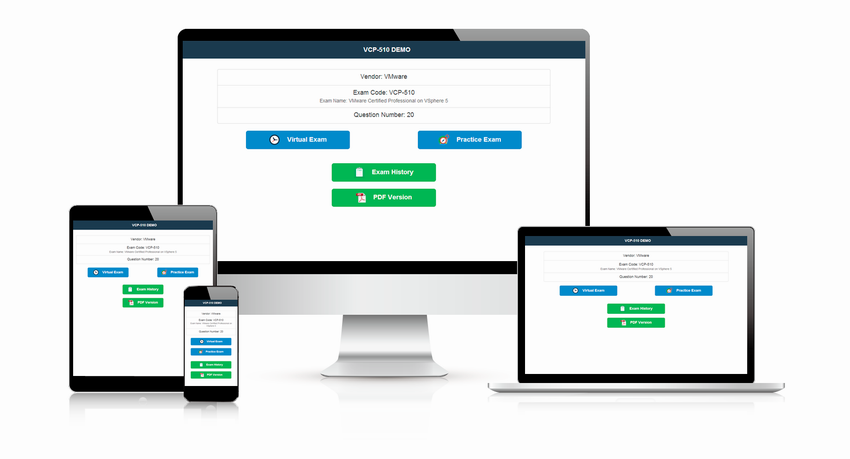
What's more, our specially designed products like AI-102 Korean free demo will provide the customer with the overview about our AI-102 Korean dump torrent. We exclusively offer instant download AI-102 Korean free sample questions & answers which can give right guidance for the candidates.
Exam AI-102: Designing and Implementing a Microsoft Azure AI Solution
Candidates for Exam AI-102: Designing and Implementing a Microsoft Azure AI Solution build, manage, and deploy AI solutions that leverage Azure Cognitive Services, Azure Cognitive Search, and Microsoft Bot Framework.
Their responsibilities include participating in all phases of AI solutions development—from requirements definition and design to development, deployment, maintenance, performance tuning, and monitoring.
They work with solution architects to translate their vision and with data scientists, data engineers, IoT specialists, and AI developers to build complete end-to-end AI solutions.
Candidates for this exam should be proficient in C# or Python and should be able to use REST-based APIs and SDKs to build computer vision, natural language processing, knowledge mining, and conversational AI solutions on Azure.
They should also understand the components that make up the Azure AI portfolio and the available data storage options. Plus, candidates need to understand and be able to apply responsible AI principles.
Part of the requirements for: Microsoft Certified: Azure AI Engineer Associate
Reference: https://docs.microsoft.com/en-us/learn/certifications/exams/ai-102
How to Register For Exam AI-102: Designing and Implementing a Microsoft Azure AI Solution?
Related Exam
Related Certifications
Over 79667+ Satisfied Customers
 0 Customer ReviewsCustomers Feedback (* Some similar or old comments have been hidden.)
Quality and Value
Free4Torrent Practice Exams are written to the highest standards of technical accuracy, using only certified subject matter experts and published authors for development - no all study materials.
Tested and Approved
We are committed to the process of vendor and third party approvals. We believe professionals and executives alike deserve the confidence of quality coverage these authorizations provide.
Easy to Pass
If you prepare for the exams using our Free4Torrent testing engine, It is easy to succeed for all certifications in the first attempt. You don't have to deal with all dumps or any free torrent / rapidshare all stuff.
Try Before Buy
Free4Torrent offers free demo of each product. You can check out the interface, question quality and usability of our practice exams before you decide to buy.












Here you can get the most valid and free IT exam torrent for your upcoming exam test. Our promise is to help you pass the exam successfully, get a higher salary and build a better life.