
Microsoft Developing AI Cloud Solutions on Azure : AI-200

- Exam Code: AI-200
- Exam Name: Developing AI Cloud Solutions on Azure
- Updated: Aug 14, 2026
- Q & A: 93 Questions and Answers
About Microsoft Developing AI Cloud Solutions on Azure : AI-200 Exam
As we all know, we should equipped ourselves with strong technological skills, thus we can have a possibility to get a higher level of position. Nowadays, AI-200 - Developing AI Cloud Solutions on Azure certification has become the essential skills in job seeking. Gaining the Developing AI Cloud Solutions on Azure test certification is the goals all the candidates covet. Here, Developing AI Cloud Solutions on Azure latest dump torrent will give you a chance to be a certified professional by getting the Developing AI Cloud Solutions on Azure : AI-200 certification. We provide you the optimum way to learn, providing you an insightful understanding of the IT technology about Developing AI Cloud Solutions on Azure exam test. With the study of Developing AI Cloud Solutions on Azure study guide torrent, you will feel more complacent and get high scores in your upcoming exams.

Instant Download: Upon successful payment, Our systems will automatically send the AI-200 dumps you have purchased to your mailbox by email. (If not received within 12 hours, please contact us. Note: don't forget to check your spam.)
Less time investment & high efficiency
To everybody, time is previous and time is money. We are busy with lots of things every day. The work time may account for the most proportion of the daytime. After work you may spend time with your family, such as, play football with your little son or accompany your wife to enjoy an excellent movie. When it comes to Developing AI Cloud Solutions on Azure exam test, you feel tired and spare no time for the preparation. But now, your worry and confusion will be vanished soon. Our Developing AI Cloud Solutions on Azure free valid material & latest dump torrent will help you get out of the predicament. You just need to speed 20-30h with our Developing AI Cloud Solutions on Azure practice torrent on your study for the preparation, then you can face the actual exam with confident and ease. The 100% pass is our guarantee for you. In addition, we have On-line test and soft-ware test engine which can allow you to have the simulation test. Our Microsoft AI-200 Developing AI Cloud Solutions on Azure test engine is suitable for any electronic device. You can download and store on your phone or pad and take full use of the fragmentary time for study, such as take the subway and wait for a coffee. Thus time is saved easily and your reviewing for the test is also done at the same time. The high-accurate Developing AI Cloud Solutions on Azure valid practice torrent will improve your reviewing efficiency and help you get success at the actual test.
Free demo is available for everyone
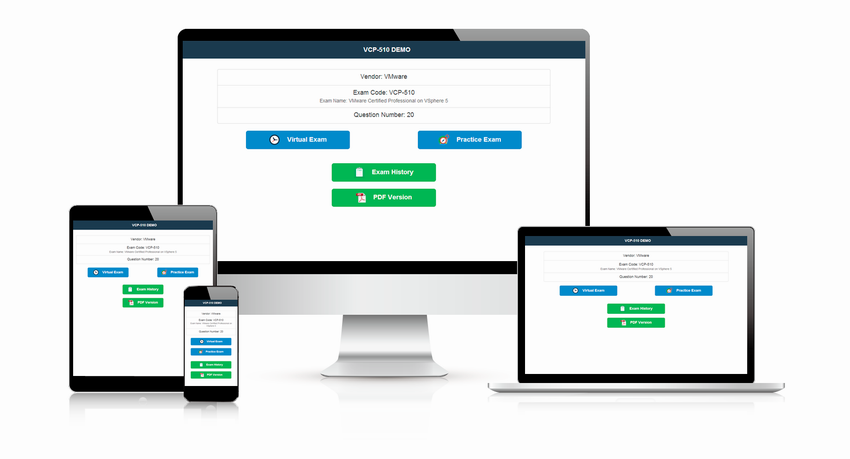
When you visit our site, you will find there are Developing AI Cloud Solutions on Azure exam free demo for you to download. To many people, the free demo holds significant contribution towards the evaluation for the Developing AI Cloud Solutions on Azure training torrent. Actually, when you decide to spend your money on the exam dumps, you should assess whether it is worth or not firstly. You think your investment on the products are worth and may do some help to your Developing AI Cloud Solutions on Azure exam test. Here, Microsoft Developing AI Cloud Solutions on Azure free demo is accessible and available for all of you. You can download the free demo and have a try. We have three version free demos which are in accord with the complete dumps below. From the demo, you can know about the format of each version and decide which format is suitable for you. If possible, you can choose all of them. The questions & answers are part of the complete Developing AI Cloud Solutions on Azure study guide torrent, from which you may find the similar questions you ever meet in the actual test. While, if you don't intend to buy our complete AI-200 Developing AI Cloud Solutions on Azure latest dump torrent, what you get from our free demo will also do some help. Your knowledge is broadened and your ability is enhanced, what an excellent thing. So try our Microsoft Developing AI Cloud Solutions on Azure free demo first, no matter you are going to buy or not.
Microsoft AI-200 Exam Syllabus Topics:
| Section | Weight | Objectives |
|---|---|---|
| Topic 1: Develop containerized AI solutions on Azure | 25% | - Monitor and troubleshoot containerized workloads
|
| Topic 2: Secure, monitor, and optimize AI solutions | 20% | - Manage security and configuration
|
| Topic 3: Integrate backend services and build event-driven architectures | 25% | - Build serverless APIs and workflows
|
| Topic 4: Develop AI solutions using Azure data services | 30% | - Design and optimize data access and retrieval
|
Microsoft Developing AI Cloud Solutions on Azure Sample Questions:
1. You are building a multi-agent solution in Azure AI Foundry where one agent handles scheduling and another handles billing questions, and a request may need both. What should you implement?
A) A single monolithic prompt covering both domains
B) An orchestrator agent that routes sub-tasks to specialized agents and combines results
C) A single fine-tuned model trained on both domains only
D) Two separate applications with no coordination
2. You develop a message-processing service deployed to Azure Container Apps. The service reads messages from an Azure Service Bus queue.
The solution must minimize costs by ensuring NO compute resources are consumed when the queue is empty.
You need to configure scaling for the service.
Which two actions should you perform? Each correct answer presents part of the solution.
NOTE: Each correct selection is worth one point.
A) Enable HTTP ingress concurrency scaling.
B) Configure the scaling rule to allow for the termination of all active replicas.
C) Configure a Kubernetes Event-driven Autoscaler rule that monitors queue length.
D) Increase the scaling rule to allow for the maximum running replica count.
3. Your application stores conversation history so a multi-turn chatbot can reference earlier turns, but the context window is limited. You need to keep the most relevant history within token limits.
What should you implement?
A) Truncate all history after 2 turns
B) Summarize older turns and retain recent turns verbatim
C) Increase max_tokens for output only
D) Store history only in the client and never send it to the model
4. Case Study 2 - Proseware Inc.
Background
Proseware Inc. develops AI-powered knowledge management solutions for enterprise customers.
The company is modernizing its platform to support semantic search, intelligent document retrieval, and real-time partner integrations.
The engineering team uses Python and Azure SDKs. The architecture is being redesigned to support containerized microservices, vector search workloads, and serverless backend processing.
Planned Application Architecture
Microservices are containerized by using Docker.
Code for containerized microservices and Azure Function apps is developed locally but stored in a GitHub repository.
Custom images for containerized microservices are stored in Azure Container Registry (ACR).
Base images are stored in Docker Hub. Custom images must be rebuilt automatically whenever their base images are updated.
Azure Cosmos DB for NoSQL stores documents, metadata, and vector embeddings.
Azure Functions generate vector embeddings of Azure Cosmos DB for NoSQL-hosted documents and send messages to Service Bus to trigger search index updates.
Azure Container Apps (ACA) apps host backend API services that provide semantic search across Azure Cosmos DB for NoSQL documents. API services process Service Bus messages and update search indexes.
Azure Kubernetes Service (AKS) processes batch vector embedding regeneration for existing Azure Cosmos DB for NoSQL documents (whenever the embedding model is changed).
An extranet-facing containerized webhook allows business partners to submit documents to be processed by internal AI workflows for semantic search and retrieval.
Monitoring
Telemetry generated by Azure resources is sent to Azure Monitor.
A Log Analytics workspace is used to collect ACA apps logs, AKS container logs, and Azure Functions apps logs.
Monitoring of Azure Functions is currently implemented by using Azure Application Insights SDK instrumentation.
Business Requirements
Embeddings for new or updated Azure Cosmos DB for NoSQL-hosted documents must be automatically generated.
Backend API services must scale automatically during business hours.
Cold start delay of backend APIs must be minimized.
Secrets must be stored outside of container images.
Developers must be able to correlate telemetry across Azure Functions hosts and apps.
All tracing must be implemented by using OpenTelemetry SDK instrumentation.
Development efforts must be minimized.
Technical Requirements
Container images must be built automatically and validated before code updates are merged into the main branch.
Image build automation must run inside the Azure Container Registry, eliminating dependency on local developer machines and external build services.
Dependency of image builds on local developer machines must be eliminated.
Event-driven scaling in ACA must occur based on the number of pending messages in the Azure Service Bus queue.
Azure Cosmos DB for NoSQL RU consumption must be minimized.
Vector similarity search must use embeddings stored in Azure Cosmos DB for NoSQL.
The partner-facing containerized webhook service must run on Azure App Service.
Secrets must NOT be stored in container images, source control, or application configuration directly. They must be accessed securely at runtime.
All secrets must be stored centrally in Azure Key Vault and accessed at runtime through a managed identity.
Azure App Service must supply secrets at runtime without relying on external services.
Resources and workloads must be deployed by using Bicep templates through an automated, version-controlled pipeline. Local and command-line deployments must be eliminated to ensure repeatable, auditable deployments.
Known Issues
RU consumption spikes during vector similarity queries.
Drag and Drop Question
You need to configure event-driven scaling for the backend API services to meet the technical requirements.
Which settings should you use for each element? To answer, move the appropriate settings to the correct elements. You may use each setting once, more than once, or not at all. You may need to move the split bar between panes or scroll to view content.
NOTE: Each correct selection is worth one point.
5. Hotspot Question
You are developing an application that uses a Python API to perform similarity queries against Azure Database for PostgreSQL. The application creates a new database connection for every request.
During peak traffic, the application intermittently fails to open new database sessions. Logs indicate that the maximum number of connections have been reached.
You need to configure the connection pooling strategy to reduce connection setup overhead and maximize reuse for the high-concurrency workload.
What should you configure? To answer, select the appropriate options in the answer area.
NOTE: Each correct selection is worth one point.
Solutions:
| Question # 1 Answer: B | Question # 2 Answer: B,C | Question # 3 Answer: B | Question # 4 Answer: Only visible for members | Question # 5 Answer: Only visible for members |
Related Exam
Related Certifications
Related Blogs
Over 79673+ Satisfied Customers
What Clients Say About Us
Quality and Value
Free4Torrent Practice Exams are written to the highest standards of technical accuracy, using only certified subject matter experts and published authors for development - no all study materials.
Tested and Approved
We are committed to the process of vendor and third party approvals. We believe professionals and executives alike deserve the confidence of quality coverage these authorizations provide.
Easy to Pass
If you prepare for the exams using our Free4Torrent testing engine, It is easy to succeed for all certifications in the first attempt. You don't have to deal with all dumps or any free torrent / rapidshare all stuff.
Try Before Buy
Free4Torrent offers free demo of each product. You can check out the interface, question quality and usability of our practice exams before you decide to buy.












Here you can get the most valid and free IT exam torrent for your upcoming exam test. Our promise is to help you pass the exam successfully, get a higher salary and build a better life.